

Pastor’s Word
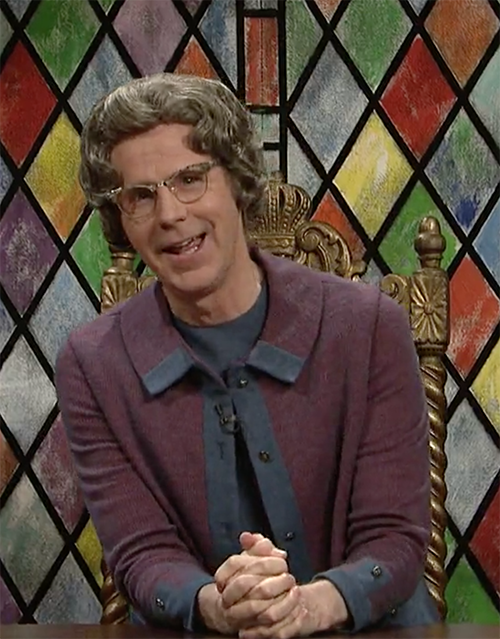
Church Chats with Pastor Dale
by Rev. Dale Azevedo, Sr. Minister
I want to connect with you!
For some of you, it has been ages since I have seen you or spoken with you. Even the simple handshake or hug with an exchange of a few sentences after worship or as we walked out of a church meeting felt like enough to stay connected, knowing that if anything serious was going on you could easily whisper something to me and let me know you were going to call.
Now, these simple little exchanges aren’t happening.
As a church we’ve come up with numerous ways of reaching out and providing opportunities for people to remain connected with one another. Some of these are in person options, like our Parking lot Prayers and Taizé meditations, while others are virtual, like our relaxation through coloring adult group. Today I’m inviting you to a series of small group gatherings that we are calling Church Chats with Pastor Dale.
This series of gatherings are a chance for me to connect with each of you in a small group setting where we can share a bit with each other about how we’re doing, what challenges and joys we’ve faced in the last 8 months, and what role the church is or could be playing at this time. I hope these groups will be serious, fun, meaningful, and comfortable. Most importantly, I hope it will help you and me feel more deeply connected. The planning team and I have a handful of questions that will prompt our discussions and then we’ll see where the Spirit leads us.
Right now, five sessions planned for roughly 6-8 people in each. They take place at random days and times hoping that EVERYONE will find a time that works for them. Obviously, we’ll only get by 30-40 people at these first 5 sessions, but I’m happy to schedule more if people respond. When I have done similar sessions in less daunting times, everyone has walked away saying, “That was wonderful! We should do these more often.” I anticipate you will feel the same.
The current sessions are scheduled for
- Thurs., Oct. 22, 2020 at 3:30 pm
- Mon., Oct. 26, 2020 at 7 pm
- Thurs., Nov. 5, 2020 at 7 pm
- Mon., Nov. 9, 2020 at 1:30 pm
- Sun., Nov. 22, 2020 at 11:30 am
You can sign up through Signup Genius or by contacting the church office (401) 246-0111 and leaving a message, or by emailing 
With these groups being so small we considered holding these sessions in person outside at the church. In person would, of course, be ideal.
However, that would have raised questions about accessibility, travel, and weather. So instead we opted for Zoom. It’s not ideal, but with such small groups I think we can still connect and share meaningful conversation.
I want to thank Amy Barkat, Pat Stoddard, and Liz White for working with me to plan and organize these events. Their input has been invaluable, and this wouldn’t have happened without them. I also want to encourage you to sign up. For without you, these sessions will go nowhere. Come join us, and let me know how you’re doing these days.

What’s In a Translation?
by Rev. Dr. Linda Hartley, Assoc. Minister (Designated Term)
A week ago, our Confirmands received their Bibles. It was a chilly Saturday along the banks of the Barrington River behind the education building here at the church. The sun was shining, and Fall was definitely in the air. It was part of our Confirmation Celebration (postponed from May) which will be officially celebrated this month during our virtual worship service on October 18th. As is the case with so many things this year, we’re doing things a little differently.
One of things we did differently was to record the Confirmands releasing doves with only immediate family present. In addition to receiving their Bibles, the Membership Team gave each Confirmand a cupcake (in lieu of the traditional celebration cake at coffee hour) and a river rock inscribed with the date. In short, we continue the traditions we can and modify those we cannot. It was different, but it was also good – good to gather within the guidelines set by the state to celebrate the faith journey thus far of these eight young people. You will see the recording of these events during worship on Confirmation Sunday – mark your calendars for October 18th!
This week, I’ve been thinking about the gift of a Bible to commemorate each Confirmand’s faith journey to this point and to support each one along this continuing journey. As we all know, the journey of faith is never over. We are always faced with new challenges which call upon us to grow in our faith. As a Christian community, we reach out to others for support and turn to our Scriptures to help us along this way. As I thought about the significance of gifting each Confirmand with a Bible, I got to thinking about my own Bibles.
As a pastor, I have several Bibles: a more formal-looking Bible with a black “leatherette” cover for reading in worship services, a couple of big study Bibles with footnotes galore, and a few Bibles with different translations of the original Hebrew and Greek. While I appreciate all of these Bibles, my personal favorite is one I ordered many years ago from Better World Books. I had begun attending a Congregational Church and noticed that the Bible in the pews, and the Bible from which the Scripture was read every week, was different from the Bible I had been using my whole life.
I had grown up in a church that read and studied the King James version exclusively. I had grown up believing that this was The Bible, the only Bible. I had become so accustomed to hearing the language of “thee” and “thine” that to hear “you” and “yours” was a little unsettling. It didn’t really sound “religious.” But I was also curious, so I took meticulous notes in the margins of my Order of Worship one Sunday about the version in the pews – a New Revised Standard Version. I wrote down the publisher information, the date of publication…the whole deal. Then I went online and ordered a second-hand copy, second hand because I wasn’t sure I’d like it very much. It was an experiment. An experiment that has paid off.
When I opened the package a couple of weeks later, I found a rather non-descript hard-bound Bible with a dark blue cover. Nothing notable about that, except when I opened the cover I found that this Bible was dedicated to a Julianna from a Presbyterian Church in St. Paul, Minnesota. I have often speculated about why her Bible ended up at Better World Books. Did she already have a favorite Bible? Did this one get lost in a move and donated to a thrift store?
I don’t know how it ended up at Better World Books, but I am grateful it did because it has become a treasure to me. It’s the Bible I open when I’m seeking direction. It’s the Bible I have filled with bookmarked passages that have helped me find God’s word speaking to me. It’s the Bible I read from each morning before beginning my day. It’s become a cherished companion on my own faith journey. And I’ve grown accustomed to the more “updated” language.
In seminary, of course, I found so many more translations such as the New International Version (NIV), the NET Bible, the New King James, and one called The Message. Each version of the Bible (and there are many more versions than these four) offers a slightly (and not so slightly) different translation. And each one provides a different insight into how we understand and perceive God and God’s word for us. In particular, The Message is written in contemporary language that often surprises me with new ways of seeing familiar passages. Exploring different versions can wake up my study even as I may still find myself going back to the NRSV I got second hand.
It’s funny though, how the version (the translation) we grew up with sticks with us. I found this out a few years ago when I was in Appalachia with a group of seminarians. In the Baptist churches and the Evangelical churches, the King James version was, and is, the version. Hearing passages read in the Old English, I found myself reciting along. It was like putting on a well-worn pair of jeans or a favorite pair of shoes. It fit in all the right places. It took me back to sitting in the pews with my mom and my grandmother, the language so evocative and familiar. It took me back to the beginning of my journey learning about God, about how much God loves me, about how much God loves each one of us.
And through the language, I was suddenly connected to the people I met in Appalachia in churches I had never visited before. The Bible can do that too. When I open my second-hand Bible and see Julianna’s name inside the cover, I feel a connection to her. I hope she has a Bible she treasures, a Bible that is also well-worn and filled with bookmarks. I hope the language, whether “old” or “modern,” helps her see how much God loves her too. I hope reading it and hearing it read aloud reconnects her with those who first showed her what love looks like. I also hope she knows that her Bible which found its way to me is being looked after very well.

Changing Priorities During the Pandemic
by Rev. Dale Azevedo, Sr. Minister
I don’t think any of us expected the pandemic to be going on as long as it has. Initially I thought we would have a few weeks out of church and then back in the pews. Then I thought, “Certainly by summer things will return to normal.” Then, “Well, the fall is the time.” Today I heard that the director of Operation Warp Speed, the White House’s plan to get vaccinations out to the general public as soon as possible, announced that a vaccine “will not be widely available to the general public until summer or early fall of 2021.”
That’s a long way off!
As the effects of the pandemic have continued for nearly seven months now, I asked the church council to explore what the most pressing priorities are for the church right now. After a fruitful discussion at their September meeting, the council made a few decisions that will have short and long term implications for our ministries.
Putting Brakes on the By-Laws
The first of these decisions was to suspend the Vision 2020 Team. This was partly due to reassessing priorities and partly based on a recommendation from the by-law revisions (AKA Vision 2020) team. The reality is that this group has been working hard since June of 2019. They have developed a new system of church governance that will minimize elected positions, streamline our efforts, and open the door for more people to begin or continue ministries that they are passionate about.
It’s pretty exciting! It’s also pretty ambitious.
The team is now at a point where they need to refine the details of their vision and begin to share it with the congregation. This led to two concerns:
- Is during a global pandemic a good time to introduce a substantial change in the way we do business?
- Is using Zoom and other physically distanced approaches an effective means of trying to convey a new vision of the church and receive helpful feedback?
The team and the council felt the answer to both was “no.” Therefore the Vision 2020 Team has been suspended until a time closer to when the congregation can gather en-masse and hold meaningful conversations.
Who Will We Need When All This Clears Up?
The second decision holds perhaps greater impact for our church in the short term. The council decided to suspend the search for a settled Associate Minister of Congregational Life. This was a hard decision.
When the Church Council voted to move forward with forming a search committee in March, they did not expect the pandemic shutdown to last this long. We felt confident that the job description we prepared would remain relevant post-pandemic and that our finances would hold strong. Well, the pandemic has lasted longer than any of us guessed and it is worth revisiting both of those assumptions.
Our ministry has changed since March and it will likely keep changing in the year ahead. A question I ask is, “What will we need from a settled Associate Minister in the post-pandemic church? I don’t know. And I don’t think we will know for another 6-12 months. Times and the church are changing and we don’t know yet what they will become.
Also, while our financial outlook remains strong right now, we do not know what it will look like as we move through 2021. I am optimistic that giving will continue to keep pace with expenses, but for now that is just optimism and not based in any concrete numbers. We will learn the answer to this soon enough.
For these two reasons, along with a third I mention below, the council decided that now is not the best time to hire a new settled associate minister. We will instead seek to continue working with Linda as long as we are able and follow up with another interim or designated term if need be. We will restart the search as soon as we are confident in what our ministry needs will be and what our financial outlook presents.
So What Are We Doing Instead?
This is the question we are asking now. In addition to the points raised above, the council recognized that those two priorities were very demanding on my time. The originating question for the discussion was, “What ought our priorities be at this time in the life of BCCUCC?” Should I be spending hours each week working with these two teams or would my time be better spent supporting and initiating ministries directly related to keeping us strong and vibrant during the shutdown? Obviously, by the results, the council decided on the latter. The would like me to be focusing on keeping us healthy, strong, and vibrant right now.
But what does that mean? We are still wrestling with that answer. I am hoping that the council will continue that conversation each month. Not only the council, but our ministry teams, deacons, and other missional groups should be asking that question too. We can’t do ministry the way we always have. So, how do we still remain relevant in this day and time? There are still needs in our congregation, community, and world. How can we still fulfill our individual and collective ministries when we can’t do it the “old way”? We have to adapt.
I hope that as we continue this journey together we can keep this conversation going. I hope we can keep adapting. I hope we can keep reinventing ways to be in ministry that makes a real difference in peoples’ lives. Even if we have to suspend some of our planned activities, with faith, I know we will make this happen.